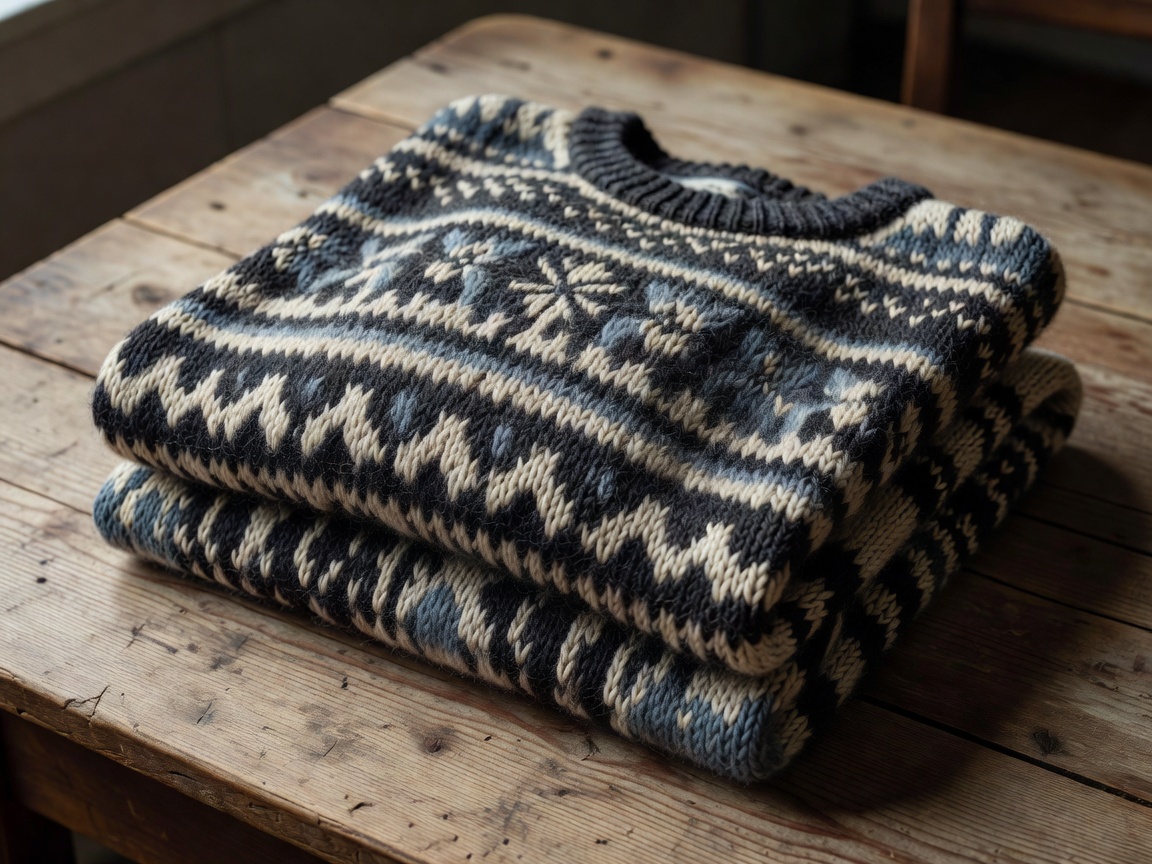
Busnel
Busnel is a heritage knitwear label with roots stretching back to the early 20th century, historically associated with intricately patterned jacquard sweaters produced using traditional knitting techniques. The brand's signature is texture and pattern rather than silhouette — jacquard motifs, cable knits and heavier gauge wool built for genuine cold-weather wear rather than purely decorative layering. In recent years the label has been positioned as a considered, design-led knitwear house rather than a mass basics brand, with production values and pattern complexity that place it above typical commercial knitwear.
Because Busnel's core product is knitwear rather than a full ready-to-wear range, it works best as a focused purchase — one strong jumper or cardigan — rather than a full wardrobe source.
Tiger of Sweden
Tiger of Sweden's story runs even further back, originating from a tailoring workshop over a century ago and evolving through decades of Swedish menswear tradition before repositioning as a contemporary suiting and ready-to-wear house. What makes it relevant to this category specifically is construction: tailored jackets and outerwear built with genuine structure — proper canvassing, considered proportions — rather than the softer, unstructured tailoring common in fast fashion. That heritage construction knowledge carries into its outerwear more broadly, including coats designed to hold shape through repeated wear.
Why heritage construction still matters
Outerwear and knitwear are two of the hardest categories to get right at low cost, because both depend heavily on the quality of raw material and the skill of construction rather than just the cut. A jacquard sweater with a loosely tensioned knit will lose shape quickly regardless of the wool used; a tailored coat with poor canvassing will never sit correctly no matter how good the fabric looks on the hanger. Brands with genuine manufacturing heritage, like Busnel and Tiger of Sweden, have institutional knowledge in these specific techniques that's difficult for newer labels to replicate quickly.
Advantages of heritage-led labels
- Construction techniques refined over decades, particularly in tailoring and knitwear.
- Distinctive pattern and texture work that's hard to find in mass-market ranges.
- Pieces designed for genuine longevity rather than a single season.
What to consider
- Narrower product ranges compared with full-collection contemporary brands.
- Heritage positioning generally comes with premium pricing.
- Pattern-heavy knitwear (like jacquard) is a stronger style statement, so it suits fewer wardrobes than plain basics.
Comparison
| Brand | Heritage | Core category | Best for |
|---|---|---|---|
| Busnel | Early 20th-century knitting tradition | Jacquard and patterned knitwear | One statement sweater or cardigan |
| Tiger of Sweden | Century-old tailoring workshop origins | Structured tailoring and outerwear | Coats and suiting built to hold shape |
Buying tips for heritage pieces
For tailoring, always check shoulder fit first — it's the hardest part of a jacket to alter later — and expect to have sleeve length adjusted by a tailor if buying off-the-rack. For patterned knitwear, check care instructions closely, since jacquard and cable-knit wool pieces often need gentler washing than plain knits to preserve pattern definition over time. In both cases, treat these as long-term wardrobe investments rather than seasonal purchases, and budget accordingly against the premium positioning both brands carry.